I built an AI ad-creative tool from zero. Here's the thinking behind Aduarius.
I've briefed thousands of ad banners across iGaming and Web3, so I built Aduarius – an AI tool that turns a brief into on-brand creative in 8 seconds.
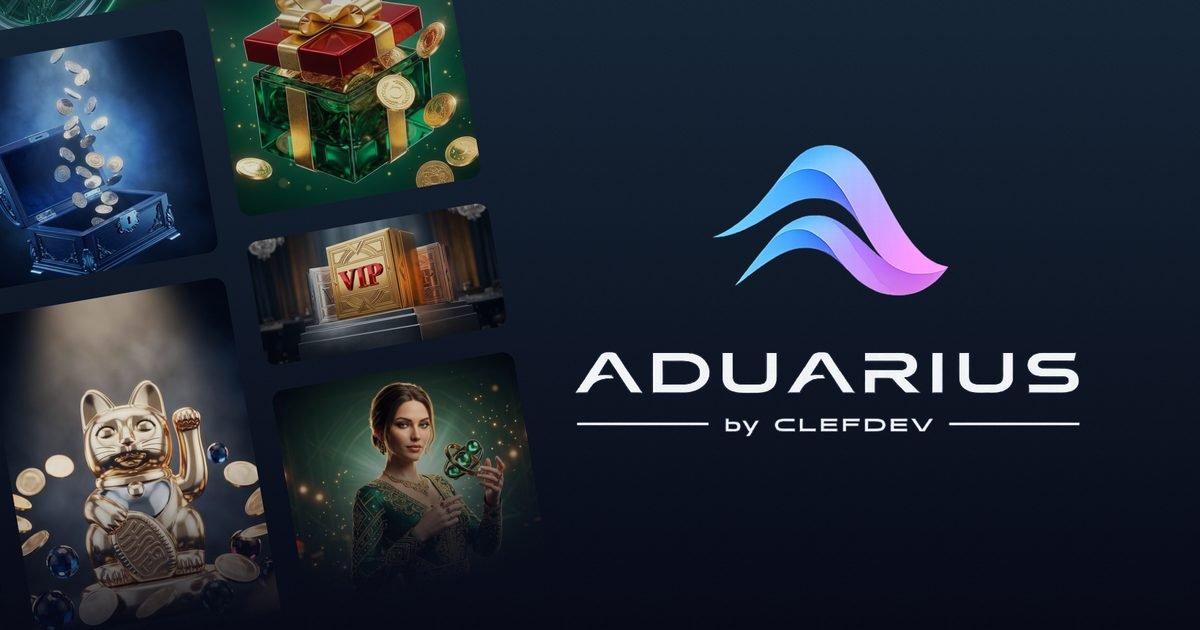
I've spent 10+ years taking high-stakes briefs to shipped products, and a huge share of that work is ad creative. Casino launch banners. Sportsbook promos. Web3 landing heroes. Across 23+ projects, I've briefed, designed and shipped more promotional banners than I can count. So when I say the banner production loop is broken, it's not a theory – it's the part of the job that quietly ate the most time.
In 2026 I decided to build the tool I always wanted. It's called Aduarius, and it turns a text brief into on-brand ad creative – banners, hero shots, promos – in about eight seconds. This is the thinking behind it: the problem it solves, the calls I made, and why it exists.
The problem I'd lived with for a decade
Every performance-marketing team runs the same loop. A campaign brief lands. You need sixteen banner variants across three formats by a deadline that was already tight when it arrived. A designer queues the work, produces the first drafts, waits on feedback, produces revisions, then adapts everything into square, vertical and horizontal. Four days later the creative ships – often just after the campaign moment it was meant to hit.
I've been on every side of that loop: the designer drawing the variants, the lead coordinating the team, the person answering to the client. The bottleneck is never talent. It's that the loop itself is linear and manual, and it doesn't scale. Adding designers just adds coordination overhead. Generic AI image tools spit out something pretty but off-brand, so a designer has to redraw it anyway. Templates keep you on-brand but slow you back down.
The gap I wanted to close: on-brand creative, at the speed of a prompt, in every format a campaign needs. Not "an AI image." A banner that looks like the brand it's for.
Why I built it as a vertical tool, not another generic generator
The first decision was the most important one. Aduarius is not a general image generator with a marketing skin. It's built specifically for ad creative, and that narrowness is the point.
A general model treats "make a banner" like any other image prompt. A vertical tool can bake in the things that actually make ad creative work: layout conventions, text hierarchy, format-aware composition, and a set of brand styles that carry a consistent look. When the problem space is constrained, the output gets dramatically more useful.
That's the same principle I've applied to every product I've shipped – a sweepstakes cashier, a Web3 onboarding flow, a betting UX – the craft is in designing tightly around the real constraint, not in going broad. So Aduarius ships with defined styles, each tuned to a specific visual language rather than left to chance. The user picks a style, writes what they need, and the system generates within those rails – fast, and on-brand by default.
The hard problems weren't the AI – they were the product decisions
Wiring up generative models is the easy part now. Anyone can call an API. The real work was everywhere else, and that's where a product actually lives or dies.
Money and trust. People buy credits, so the payment and crediting logic has to be airtight. I built dual rails – card subscriptions and stablecoin top-ups – with the crediting logic designed so a payment can never double-charge or silently fail. Then I ran an adversarial pass over the money flows specifically looking for ways to break them, because "close enough" isn't acceptable when real funds move.
Failure recovery. Generation can succeed on the system side but still not reach the user cleanly. Left alone, that strands someone who paid credits for nothing. So there's recovery logic that detects the failure and refunds the credits automatically. Nobody notices this when it works – which is exactly the point.
Editing after generation. Real campaigns need copy changes. So the output isn't a dead image – text stays editable after the fact, and variants save without starting over. That one detail is the difference between a toy and something a team can actually ship from.
Every one of these is a design-and-delivery problem, not an AI problem. That's the through-line of how I work: the model is just a component. The product is everything I build around it.
Where honesty mattered in the build
One call I want to be straight about, because it's a real product boundary. Aduarius does not silently learn a user's brand from whatever they upload. The custom brand presets – a style tuned to a specific company's look – are something my team at ClefDev builds deliberately, as a service, on top of the engine.
I'd rather ship a clear, honest capability than over-promise an "it learns everything automatically" story that falls apart the first time someone tests it. Knowing where to draw that line – and saying it out loud – is part of the craft too.
What building this proved to me
I've always described how I work as designer-led and founder-minded: one person who can take a high-stakes brief and own it all the way to a shipped product. Aduarius is that thesis compiled into a single artifact. I designed the interface, made the architecture calls, built the logic that handles money and failure, and shipped it publicly – business model and all.
The tool solves a problem I've personally hit on every campaign for a decade. But building it also proved the thing I care most about professionally: that the gap between a sharp brief and a shipped product can be owned by one person who leads, designs and builds – and that AI, used well, makes that person faster, not replaceable.
If you run performance-marketing creative and want to feel the difference, Aduarius is live, with a free trial. And if you've got a high-stakes brief of your own that needs taking from a blank page to launch, that's exactly what I do.
More on how I work: a launched US sweepstakes casino (Coinz.us), a Web3 crypto casino landing page (Solslots), and a native tap-bar for a banking app (Open Bank).
Sources
This piece is a first-party account of my own project work – no third-party research is cited.